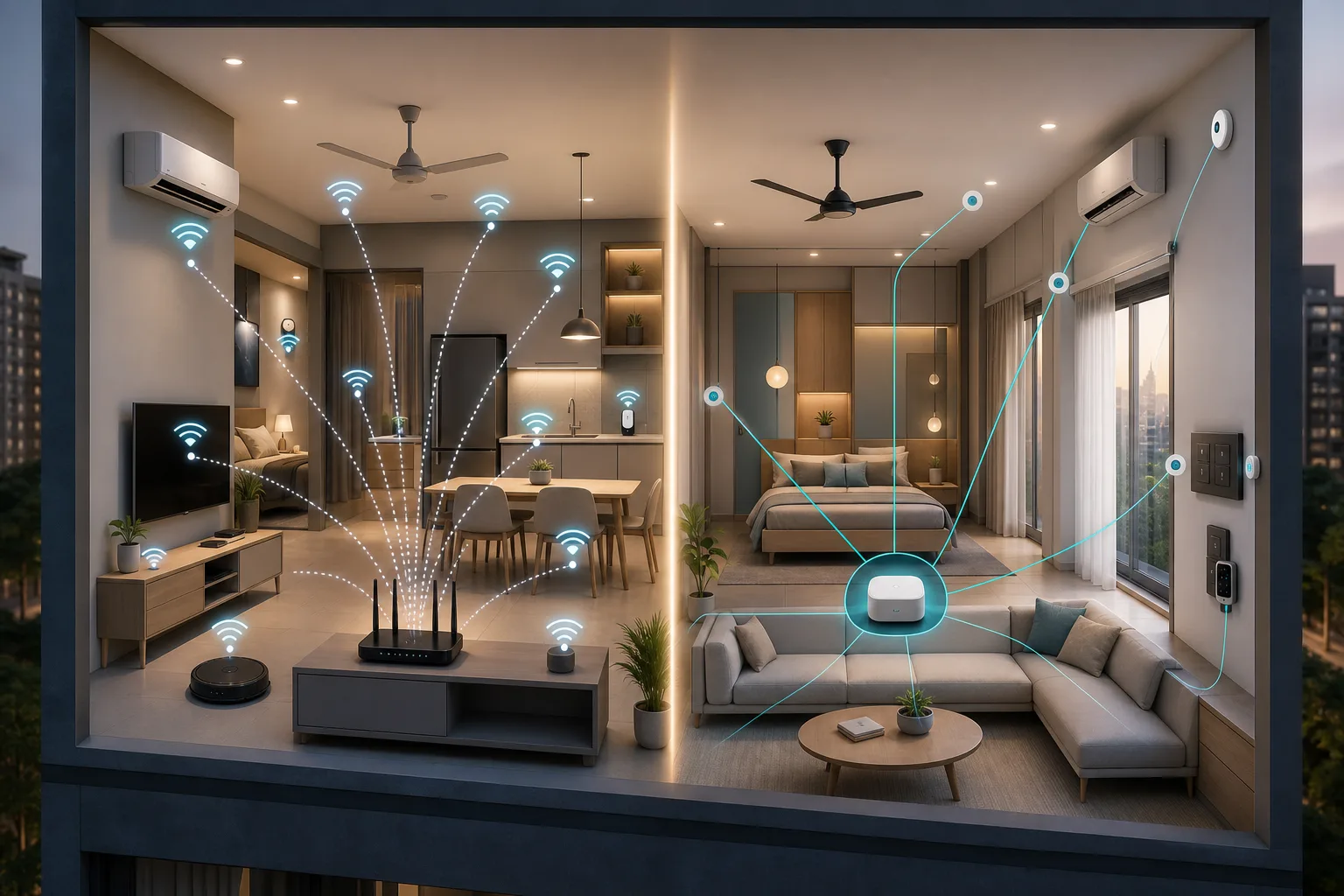
Top Home Automation Companies in India (2026)
Comprehensive guide to the best home automation companies in India. Compare features, pricing, and services of leading smart home companies to find the perfect fit for your needs.

By Abhi Bavishi
India's smart home market is no longer a niche experiment for early adopters. According to Mordor Intelligence, the market is estimated at USD 6.71 billion in 2026, up from USD 5.20 billion in 2025, and is projected to reach USD 24.1 billion by 2031 — a 29.12% CAGR. The firm attributes the growth to nationwide 5G rollout, rooftop-solar incentives under the PM Surya Ghar scheme, and the arrival of Matter, the cross-vendor protocol that finally lets devices from different brands talk to each other without a proprietary hub.
That last point matters more than any single spec sheet. It means the old advice — "pick one ecosystem and stay locked into it" — is quietly becoming outdated. But it also means the market is more crowded and confusing than ever: budget Indian D2C brands, global electrical majors, utility-backed retrofit ranges, and ultra-premium AV integrators are all competing for the same customer, often with wildly different products hiding under the same "smart home company" label.
Whether you're in Mumbai, Bangalore, Delhi, or a tier-2 city, this guide breaks down the top home automation companies in India for 2026 — what each one actually sells, what it costs, and who it's genuinely built for.
Top Home Automation Companies in India (2026)
We've evaluated these companies based on product range, installation quality, after-sales service, pricing transparency, city coverage, Matter/ecosystem compatibility, and customer reviews. Before you compare them line by line, it helps to know that they aren't all playing the same game:
- Multi-brand integrator / platform — Smartify. Sells the design, sourcing, and installation of a system built from 50+ brands, not one product line.
- Indian D2C device brands — AzIot, Wipro, Qubo. Sell individual retrofit devices (switches, plugs, cameras, locks) direct to consumers online and through retail.
- Utility-scale mass adoption — Tata Power EZ Home. A retrofit range backed by one of India's largest power companies, sold on an energy-savings pitch.
- Global electrical majors moving into smart homes — Schneider Wiser, ABB, Legrand. Established switch and wiring-device manufacturers layering automation onto their existing electrical business.
- Ecosystem / Matter specialist — Aqara. A device ecosystem built around Apple HomeKit and Matter, sold through integrators and e-commerce rather than a company's own installers.
- Ultra-premium professional automation — Control4. A dealer-installed whole-home control platform for luxury villas and home theatres.
Comparing a ₹739 AzIot plug to a ₹20-lakh Control4 system on price alone misses the point — they solve different problems. Here's what each company actually offers.
1. Smartify
Overview: Smartify is a brand of AutoDeus Technologies Pvt. Ltd., founded in 2016 and headquartered in GIFT City, Gandhinagar. It's a vendor-neutral, multi-brand integrator — instead of selling you one company's ecosystem, it designs and installs a system pulled from 50+ global brands like Philips Hue, Google Nest, Aqara, Sonos, Yale, Fibaro, and Sonoff, matched to Alexa, Google Assistant, Apple HomeKit, or Samsung SmartThings depending on what you already use.
What Makes Them Special:
- Multi-brand flexibility: Work with 50+ brands — no vendor lock-in
- No rewiring required: Retrofit solutions across Zigbee, WiFi, and Matter that work with your existing electrical setup
- Wide coverage: Company-reported service across 349+ cities, from metros to tier-3 towns
- Price transparency: An online cost calculator that gives instant estimates, plus tiered BHK packages starting at ₹24,990
- Track record: Operating since 2016, with 800+ residential and 15+ commercial projects reported by the company
- Post-installation support: Dedicated customer service and remote troubleshooting
Specialties: Whole-home automation, wireless/retrofit solutions, multi-brand integration, voice control (Alexa, Google Assistant, Siri), custom scenes, energy monitoring
Price Range: ₹15,000 - ₹5,00,000+ (packages from ₹24,990, customizable to home size and features)
Cities Served: 349+ cities including all metros, tier-1, tier-2, and many tier-3 cities (company-reported)
Pros:
- Choose best-in-class products across categories instead of one brand's full range
- No expensive rewiring projects
- Transparent pricing with a public cost calculator and itemized quotes
- Reach into tier-2/tier-3 cities most integrators skip
- Works with your existing Wi-Fi and, increasingly, Matter
- Expert consultation before purchase
Cons:
- Requires stable internet for most cloud-dependent features
- Multi-brand systems have a learning curve for advanced automations (though support is available)
Best Suited For: Homeowners who want flexibility across brands, buyers in tier-2/tier-3 cities, anyone avoiding rewiring hassles, and budget-conscious buyers who want transparent, upfront pricing.
2. AzIot
Overview: AzIot is a Hyderabad-based, 100% Indian-owned D2C brand from Smartoholic Brands Pvt. Ltd., positioned around an "A to Z IoT," Made-in-India pitch. It's a young company — Smartoholic Brands reported roughly ₹6.5 lakh in revenue for FY24 — so treat "10+ years in the industry" as a marketing claim tied to affiliated entities rather than the AzIot brand itself.
Specialties: Retrofit smart switch modules, toughened-glass touch switch panels (Elevate series), smart plugs, WiFi smart circuit breakers/MCBs with energy metering, WiFi smart door locks, IR blasters, smart ceiling-fan kits, and a HEPA air purifier.
Price Range: ₹739 - ₹8,499 (smart plugs from ~₹739, touch panels ₹3,599-₹5,999, smart locks ~₹4,999)
Cities Served / Ecosystem: Sold online pan-India via Shopify, Amazon, and Flipkart, with a dealer program but no verified physical showroom network. Important to know: AzIot devices run on the third-party Tuya / Smart Life app, not a proprietary platform — voice control works through Alexa, Google Assistant, and Siri Shortcuts, and most devices need no hub.
Pros:
- Very low entry price for individual devices
- Made in India, no-hub-required WiFi devices
- Wide catalogue for a young brand — switches, locks, MCBs, IR control, even car accessories
- Runs on the well-supported Tuya ecosystem, so third-party integrations (Home Assistant, IFTTT) are straightforward
Cons:
- Very early-stage company with limited track record and no independently verified units-sold figure
- No proprietary app or ecosystem — you're really buying into Tuya
- Little to no physical installation support; largely a self-install, online-only brand
Best Suited For: Budget, DIY buyers who want to automate one room or device at a time with affordable, Made-in-India switches and locks and are comfortable self-installing.
3. Wipro
Overview: Wipro Consumer Lighting — part of Wipro Enterprises, distinct from the IT services company — has extended its long-running LED lighting business into smart lighting under the Wipro Next range (formerly marketed as "Wipro Smart"). It's lighting-first, not a whole-home automation platform.
Specialties: WiFi smart LED bulbs, battens, CCT+RGB fixtures, LED strips, smart plugs, and smart switches, controlled through the Wipro Next Smart Home app.
Price Range: ₹500 - ₹30,000
Cities Served / Ecosystem: Sold pan-India through Wipro's national retail network plus Flipkart and Amazon. Supports Alexa and Google Assistant voice control and basic scenes/scheduling; no native Apple HomeKit. App store reviews cite recurring complaints about login reliability and offline-device handling.
Pros:
- Extremely affordable entry point
- Trusted, established Indian lighting brand
- Widely available in retail stores, not just online
- Good for lighting-focused automation specifically
Cons:
- Limited product range outside lighting and basic switches
- No native Apple HomeKit support
- No professional installation support
- App reliability complaints in user reviews
Best Suited For: First-time smart home users who want to automate lighting only, on a tight budget, from an established Indian consumer brand.
4. Qubo
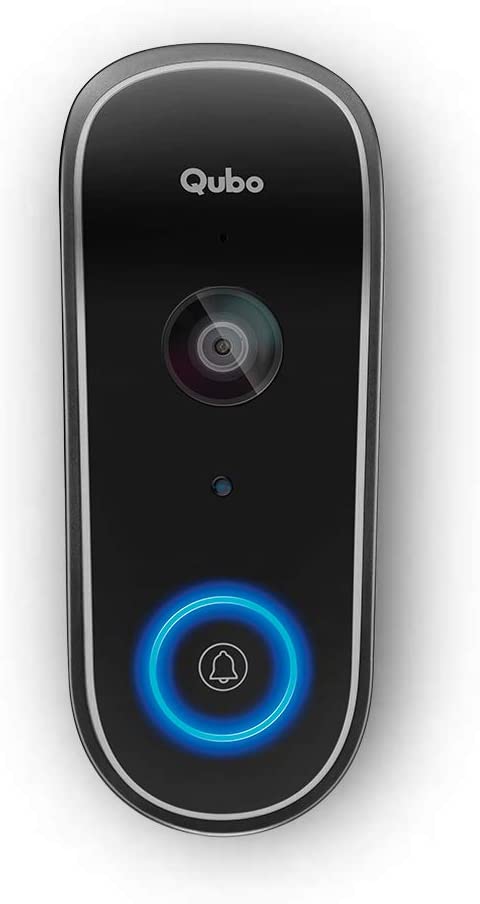
Overview: Qubo is the smart-devices brand of Hero Electronix, the consumer-tech arm of the Hero Group. Per Qubo's own April 2025 announcement, the brand crossed ₹275 crore in FY25 revenue and has shipped over a million devices — one of the more credible scale claims on this list. It's a security/AIoT device brand rather than a whole-home automation platform.
Specialties: WiFi security cameras, outdoor cameras, video doorbells, smart door locks, dashcams, GPS trackers, air purifiers, and smart bulbs/plugs. Qubo is effectively the market leader in Indian dashcams and video doorbells.
Price Range: ₹2,500 - ₹22,990 (average ticket around ₹5,000; smart locks ₹13,990-₹22,990)
Cities Served / Ecosystem: ~65% of sales online (Amazon, Flipkart, own site) backed by 1,500+ offline stores. Single Qubo app, Alexa and Google Home compatible, local-storage options with no mandatory cloud subscription for core functions, and a 3-year warranty. Smartify stocks a range of Qubo products, including the Qubo Video Doorbell shown above.
Pros:
- Strong, independently reported revenue and shipment scale for an Indian D2C brand
- Best-in-class for dashcams and video doorbells specifically
- Local storage options avoid forced cloud subscriptions
- 3-year warranty is longer than most competitors on this list
Cons:
- Security/AIoT focused — not a lighting, switch, or whole-home automation platform
- Smaller product range than multi-brand integrators or electrical majors
Best Suited For: Security-first buyers who want trusted, affordable cameras, video doorbells, and locks from a mass-market Indian brand, without needing a full automation system.
5. Schneider Wiser (Schneider Electric)
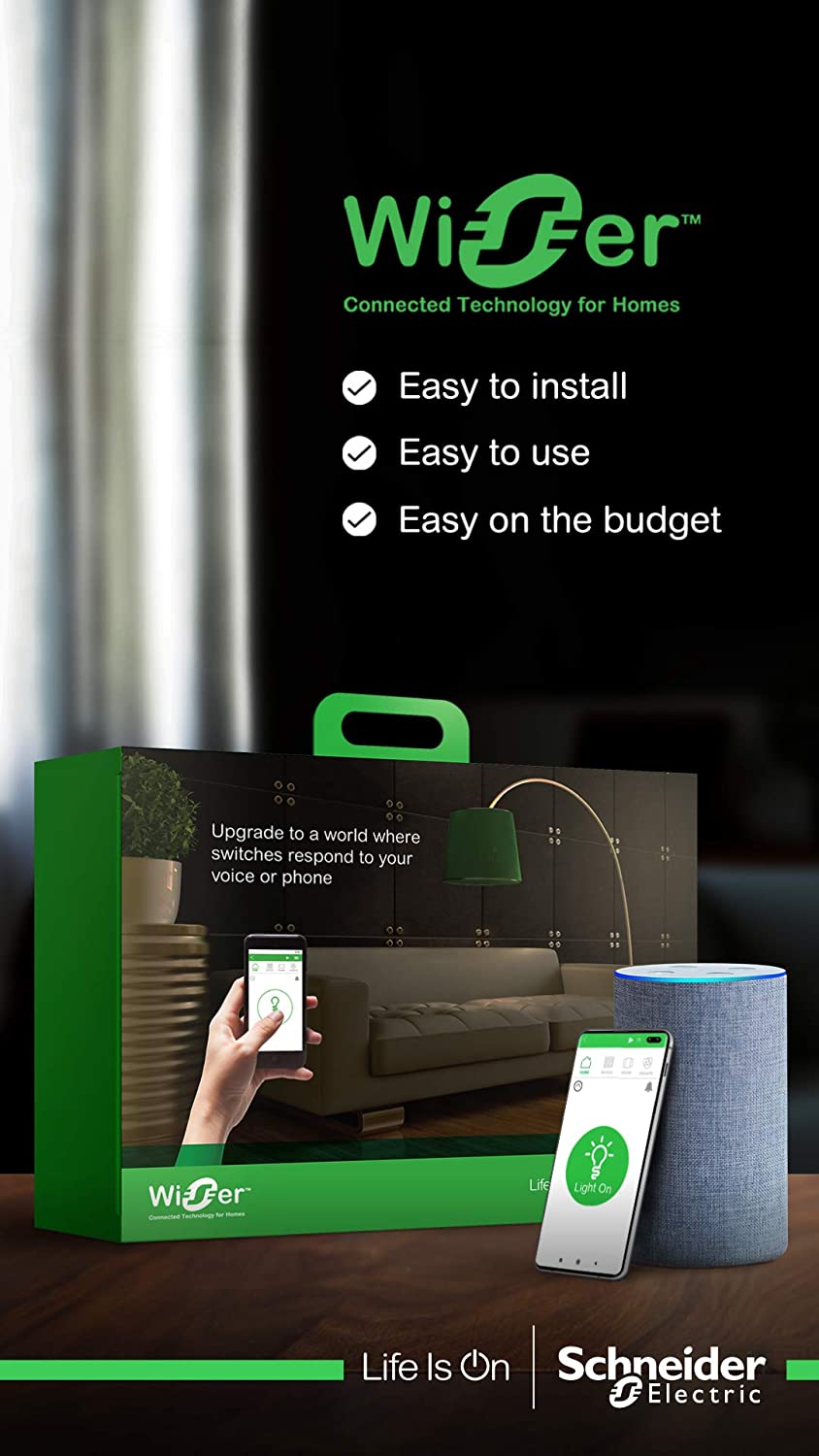
Overview: Schneider Electric is a global energy-management and automation major; Wiser is its smart-home line, pitched in India as converting a home to smart "in under 4 hours" with no rewiring. It's one of the more credible Matter stories on this list — the Wiser Gateway and Wiser Smart Plug were among the world's first Matter-certified products back in 2022.
Specialties: WiFi/Zigbee smart switches, dimmers, sockets, smart plugs, IR controllers, curtain/roller-shutter control, a gateway/hub, and a Home Energy Management System (HEMS) with real-time monitoring across rooms and sources.
Price Range: ₹5,000 - ₹2,00,000
Cities Served / Ecosystem: Sold pan-India through Schneider's electrical-dealer network. Zigbee-based with a Matter roadmap via gateway software updates; works with Google Home and Alexa, though Schneider India itself notes integration depends on app updates. Professional installation is recommended for switches and energy devices. Smartify stocks Schneider Wiser products, including the Wiser Automation Gateway shown above — see also our Honeywell vs Schneider comparison for how it stacks up against another electrical major.
Pros:
- Trusted global brand with a strong pan-India dealer network
- Genuine energy-management strength via HEMS
- Among the first Matter-certified smart home products anywhere
- Good for gradual, room-by-room upgrades
Cons:
- Largely tied to the Schneider ecosystem rather than open multi-brand integration
- Voice-assistant integration can be inconsistent, by Schneider's own admission
- Dealer expertise varies by city
Best Suited For: Energy-conscious homeowners and those who value a globally trusted electrical brand with a serious Matter and HEMS roadmap.
6. Tata (Tata Power EZ Home)
Overview: Tata Power EZ Home is the consumer-facing home-automation brand of Tata Power, one of India's largest integrated power companies. It ties automation directly to energy efficiency and smart metering, and is pushing hard into tier-2 markets through its "100 Cities, 1 Purpose" campaign — around 9 cities today, with a stated target of 100 within three years, including recent launches in Kolkata, Kochi, Siliguri, Coimbatore, Mohali, and Hyderabad.
Specialties: Retrofit smart switches, glass touch-panel switches, smart sockets/plugs, curtain controllers, IR blasters, motion sensors, and load converters for heavy appliances like ACs and geysers, with real-time energy monitoring.
Price Range: ~₹30,000 - ₹2,00,000
Cities Served / Ecosystem: Roughly 9 cities today, expanding under the "100 Cities" campaign, with a mix of metro and tier-2 experience centres. App-based control plus Alexa and Google Home voice control; retrofit-friendly with no rewiring and offline functionality. Tata's own materials claim "up to 20% savings on power bills," and Tata Power spokespeople have cited typical urban households saving roughly ₹10,000 a year (attributed claims, not independently audited).
Recognition: In December 2025, Tata Power EZ Home won the Home Automation category at the Ministry of Power's AI/ML National Conference in New Delhi — the sole winner in that category, ahead of shortlisted entries from Genus, Schneider Electric, Blaze, and Adani.
Pros:
- Backed by one of India's most trusted utility brands
- Genuine, award-recognised focus on energy savings
- Retrofit-friendly, no rewiring needed
- Explicitly targeting tier-2 cities most premium brands ignore
Cons:
- Still a small city footprint (~9 cities) compared to its 100-city ambition
- Energy-savings figures are company-reported, not independently audited
- Smaller product range than dedicated automation integrators
Best Suited For: Mass-market and tier-2/tier-3 households prioritising energy savings, safety, and a trusted utility brand name, with no structural changes to the home.
7. ABB (ABB-free@home)
Overview: ABB is a global electrification and automation major that launched ABB-free@home in India in September 2024 — a wired-plus-wireless residential automation system aimed squarely at the premium segment, not a DIY or mass-market product.
Specialties: Lighting, shading/blinds, HVAC control, indoor-air-quality monitoring, door communication (ABB-Welcome), scenes, energy monitoring, and EV-charger and white-goods integration via wall panels, sensors, and the free@home Next app. ABB also offers ABB i-bus KNX for larger building automation projects.
Price Range: Premium, project-based pricing (typically comparable to other global premium systems on this list)
Cities Served / Ecosystem: Sold through professional/electrician installation for premium villas, townships, and new builds. Includes a Matter Bridge add-on and integrates with Apple HomeKit, Google Home, Amazon Alexa, and Samsung SmartThings, plus Philips Hue, Miele, Sonos, and LEDVANCE.
Pros:
- Genuine engineering pedigree from a global electrification leader
- Broad interoperability via Matter Bridge and major smart-home platforms
- Strong energy-efficiency and green-building positioning
- Covers lighting, HVAC, shading, and access control in one system
Cons:
- Very new to the Indian market (launched September 2024), so long-term local track record is limited
- Not a DIY option — requires professional/electrician installation
- Premium pricing puts it out of reach for mass-market buyers
Best Suited For: Premium new-build and villa projects that want a single, interoperable, professionally installed system from a global engineering brand.
8. Legrand
Overview: Legrand is a global leader in electrical and digital building infrastructure with more than two decades of presence in India. In India, Legrand describes itself as the No. 2 player in wiring devices and a leader in MCBs, RCDs, and distribution boards — distinct from its global figures of over 20% share in wiring devices and 14% in cable management, which shouldn't be conflated with its India position. It owns Netatmo, its smart-home technology arm, acquired in 2018.
Specialties: Modular switch ranges (Myrius, Arteor, Living Now, Valena, Mylinc), IoT/home automation, MyHOME systems, door-entry systems, and lighting management. Globally, its "with Netatmo" connected ranges run on the Home + Control app.
Price Range: ₹8,000 - ₹1,50,000+
Cities Served / Ecosystem: Sold through a wide dealer network across India. "with Netatmo" ranges natively integrate Apple HomeKit, Google Assistant, Amazon Alexa, and IFTTT — Netatmo is a CSA/Matter member. Retrofit-capable on 240V for some ranges, with energy-monitoring and smart load-shedding features.
Pros:
- Premium switch aesthetics backed by deep electrical heritage
- Strong dealer network and brand trust
- Netatmo ownership gives it a credible Matter/HomeKit story
- Good energy-monitoring and load-shedding features on connected ranges
Cons:
- Premium pricing for switches specifically
- Ecosystem is narrower than multi-brand integrators — mostly switches and lighting
- Dealer expertise on the "with Netatmo" connected ranges varies by city
Best Suited For: Design-conscious homeowners, architects, and interior designers who prioritise premium switch design and finishes alongside credible connected features.
9. Aqara
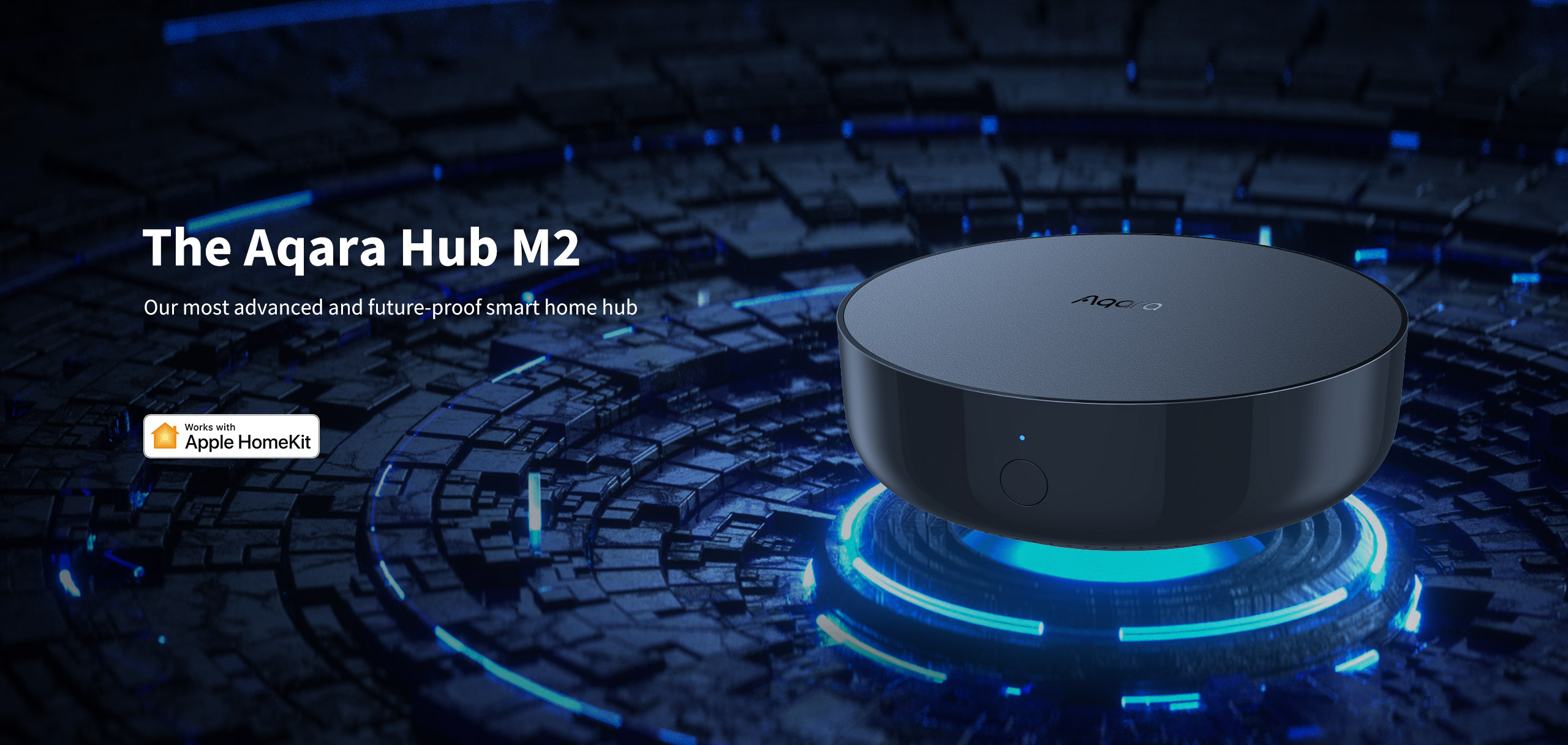
Overview: Aqara is the smart-home brand of China's Lumi United Technology — a Zigbee-based device ecosystem with some of the strongest Apple HomeKit and Matter support in the industry. In India it's sold through specialist integrators and e-commerce rather than a network of Aqara-branded installers; Smartify itself lists 19 Aqara products, including the Hub M2 pictured above.
Specialties: Hubs (M1S/M2/M3/M100/M200, plus the M410 Home Station), motion/door/temperature/water and mmWave presence sensors, smart switches and relay modules, cameras, video doorbells, smart locks, curtain/roller controllers, smart plugs, and thermostats.
Price Range: Mid-tier — individual devices typically ₹1,500-₹15,000, hubs and panels higher
Cities Served / Ecosystem: Sold via integrators (including Smartify) and e-commerce nationwide. Native Apple HomeKit support (including HomeKit Secure Video), plus Google, Alexa, SmartThings, and Home Assistant compatibility. Matter runs across the product line, with Advanced Matter Bridging exposing 50+ device types, strong local/offline processing, and no recurring subscription needed for HomeKit users.
Pros:
- Best-in-class HomeKit and Matter compatibility on this list
- Strong local/offline control — doesn't depend entirely on the cloud
- Compact, design-friendly hardware at mid-tier pricing
- Excellent value relative to Control4-tier professional systems
Cons:
- No direct Aqara-branded installation network in India — depends on integrators like Smartify or DIY setup
- Zigbee hub required for the full feature set (though many sensors work standalone with Matter)
Best Suited For: Apple-ecosystem and Matter-first buyers, and privacy-conscious users who want reliable local automation — see our Zigbee hub vs WiFi comparison if you're deciding how to connect Aqara devices.
10. Control4
Overview: Control4 is an ultra-premium professional automation platform, formerly Snap One, acquired by Resideo Technologies in June 2024 and distributed via ADI | Snap One (Resideo announced its intent to spin off ADI Global Distribution in July 2025). It's sold only through authorised integrators — not directly to consumers.
Specialties: A unified whole-home control OS, lighting and shading, multi-room A/V, home theatre, security/surveillance integration, intercom (DS3 doorstation), and networking. The 2025 Lux by Control4 line added designer keypads, dimmers, and outlets in 19 colours for luxury lighting.
Price Range: ₹3,00,000 - ₹20,00,000+ (and well beyond for large villas and commercial projects)
Cities Served / Ecosystem: Sold only through certified dealers, concentrated in roughly 12-15 metros (Mumbai, Delhi, Bangalore, Pune, Hyderabad, Goa, and others), with a training/demo centre in Bangalore. Proprietary core platform with broad third-party integration (dealer materials cite 13,500+ compatible products; Control4's own current company page cites 25,000+), requiring a Control4 Connect subscription and professional programming. Basic voice control works via Alexa and Google.
Pros:
- Unified, polished control across AV, lighting, shading, and security
- Reliable, dealer-supported performance for the highest-end projects
- Strong for dedicated home theatres and multi-room audio
- Backed by Resideo's scale post-acquisition
Cons:
- Ultra-premium pricing — not for average homeowners
- Proprietary platform requiring certified dealers for any changes
- Small, dealer-based India footprint concentrated in ~12-15 metros
- Often requires structural wiring work, unlike the retrofit options elsewhere on this list
Best Suited For: High-budget luxury homes, dedicated home theatres, and commercial or hospitality projects that want a bulletproof, dealer-supported, fully integrated system.
Comparison Table: Home Automation Companies in India
| Company | Type | Price Range | Ecosystem / Matter | Best For | Rewiring Needed? |
|---|---|---|---|---|---|
| Smartify | Multi-brand integrator | ₹15k - ₹5L+ | Alexa/Google/HomeKit/SmartThings; Matter/Zigbee/WiFi | Flexible, multi-brand, all budgets, tier 1-3 | No |
| AzIot | Indian D2C devices | ₹739 - ₹8,499 | Tuya/Smart Life; Alexa/Google/Siri | Budget DIY switches, plugs, protection | No |
| Wipro | Indian lighting brand | ₹500 - ₹30k | Wipro Next app; Alexa/Google | Budget, lighting-first | No |
| Qubo | Indian AIoT security | ₹2,500 - ₹22,990 | Qubo app; Alexa/Google | Security-first mass market | No |
| Schneider Wiser | Global electrical + HEMS | ₹5k - ₹2L | Zigbee + Matter; Alexa/Google | Mid-premium, energy management | Sometimes |
| Tata (EZ Home) | Utility-backed mass market | ~₹30k - ₹2L | EZ Home app; Alexa/Google | Mass market, energy savings, tier 2/3 | No |
| ABB (free@home) | Global premium system | Premium, project-based | Matter Bridge; HomeKit/Google/Alexa/SmartThings | Premium villas, new builds | Some (wireless option) |
| Legrand | Global electrical premium | ₹8k - ₹1.5L+ | with Netatmo; HomeKit/Google/Alexa | Design-led premium switches | Sometimes |
| Aqara | Ecosystem / Matter specialist | Mid-tier | Native HomeKit + Matter | HomeKit/DIY/prosumer | No |
| Control4 | Ultra-premium professional | ₹3L - ₹20L+ | Proprietary + broad integrations | Ultra-luxury, AV, hospitality | Often |
Key Factors to Consider When Choosing a Home Automation Company
Now that you've seen the options, how do you actually decide? Here are the critical factors to evaluate:
1. Budget and Pricing Transparency
Home automation in India ranges from under ₹1,000 for a single smart plug to ₹20 lakh+ for ultra-premium AV-integrated installations. The key question: does the company give you transparent pricing upfront, or do they make you wait for quotes after multiple site visits?
What to look for:
- Clear pricing on the website or during the first conversation
- Itemized quotes that break down product vs. installation costs
- No hidden charges for basic support or app access
- Companies like Smartify offer online cost calculators — a huge advantage for budgeting
2. Geographic Coverage
Global premium brands like Control4 and ABB concentrate on 10-15 metros. Before falling in love with a company, confirm it actually services your area with trained technicians — not just "ships products."
Questions to ask:
- Do you have local technicians in my city?
- What's the response time for service calls?
- Is installation included, or do I need to find local electricians?
- Do you charge travel fees for my location?
3. Rewiring Requirements
This is huge. Some premium systems — Control4 especially, and parts of ABB and Legrand's ranges — often need real wiring work. Others, like wireless retrofit systems, work with your existing setup.
Wireless/retrofit-friendly companies: Smartify, AzIot, Wipro, Qubo, Tata (EZ Home)
Usually require some wiring: Control4 (often), ABB and Legrand (for certain product lines), Schneider Wiser (for some switches and energy devices)
If you're automating an existing home rather than building new, prioritise companies with proven wireless solutions. Our KNX vs Zigbee guide and Zigbee hub vs WiFi guide go deeper on the wired-vs-wireless trade-off.
4. Ecosystem: Single-Brand vs. Multi-Brand vs. Matter
Do you want to be locked into one ecosystem (like Schneider or Control4), or would you prefer the flexibility to choose the best product in each category? Matter is changing this calculus — most companies on this list now support it in some form, which reduces (but doesn't eliminate) lock-in risk.
Single-brand pros: Everything works together seamlessly, single point of support, consistent app experience
Single-brand cons: Limited to that company's product range, potentially higher costs, stuck if the company discontinues products
Multi-brand pros: Choose best-in-class for each need (Philips for lighting, Nest for thermostats, Aqara for sensors), better price-performance, more future-proof
Multi-brand cons: Requires expertise to integrate properly, potentially multiple apps, coordination across vendors
Companies like Smartify and Aqara lean into multi-brand and Matter interoperability, while Schneider, ABB, Legrand, and Control4 anchor you more firmly to their own ecosystems. Explore different brands to see what's available.
5. Installation Quality and After-Sales Support
A smart home is only as good as its installation. Poor setup leads to unreliable automation, devices going offline, and frustration.
Red flags:
- Company can't provide references or a portfolio
- Technicians seem unfamiliar with the products
- No post-installation support plan
- Poor reviews about service response times
Green flags:
- Certified installers with manufacturer training
- Portfolio of completed projects you can visit
- Clear warranty and support terms
- Remote troubleshooting capability
- Dedicated customer support (not just sales)
6. Scalability and Future-Proofing
Can you start small and expand later, or do you need to install everything at once? Most people prefer to begin with lighting and gradually add security, entertainment, and climate control.
Look for:
- Modular systems you can expand room-by-room
- Open protocols (WiFi, Zigbee, Z-Wave, Matter) vs. proprietary systems
- Companies that regularly update firmware and add features
- Backward compatibility promises
7. Voice Control and App Experience
In 2026, voice control through Alexa, Google Assistant, or Siri is standard — but not all implementations are equal. You'll interact with your smart home through an app daily, and a clunky app ruins the experience.
Test before committing:
- Ask for app demos or download the app to explore
- Verify voice assistant compatibility
- Check if automations are easy to create
- Confirm the app works when you're away from home
8. Energy Monitoring and Efficiency
With rising electricity costs, energy monitoring is becoming a priority. Schneider Wiser and Tata Power EZ Home lean hardest into this, while others treat it as an add-on.
Features to look for:
- Real-time energy consumption data per appliance
- Historical usage trends
- Automated power-off for unused devices
- Peak-hour usage alerts
- Solar integration (if you have or plan solar panels)
9. Security and Privacy
Your smart home system has access to your daily routines, when you're home, camera feeds, and more. Security isn't optional — this matters especially with camera-heavy brands like Qubo.
Questions to ask:
- Where is my data stored? (Local vs. cloud)
- Is data encrypted in transit and at rest?
- Can the company access my cameras or data?
- What happens if the company shuts down?
- Are there local controls if internet goes down?
10. Consultation and Customization
Cookie-cutter solutions rarely work for smart homes. Every home has different layouts, needs, and budgets. Does the company offer genuine consultation, or is it just pushing products?
Expect from good companies:
- Site survey before quotation
- Discussion of your lifestyle and priorities
- Multiple options at different price points
- Willingness to work with your existing devices
- 3D visualizations or mockups (for premium projects)
How to Choose: A Quick Decision Tree
If you just want a shortcut, match your priority to a company:
- Want budget, DIY, single-device automation? AzIot or Wipro.
- Security cameras, doorbells, and locks first? Qubo.
- Energy savings from a brand you already trust? Schneider Wiser or Tata Power EZ Home.
- Building a premium new home or villa? ABB or Legrand.
- Apple ecosystem or Matter-first, DIY-friendly? Aqara.
- Ultra-luxury home theatre or whole-property AV? Control4.
- Want the best of all of the above, without locking into one brand? That's the gap Smartify is built to fill — multi-brand sourcing, retrofit installation, and transparent pricing across budgets and cities.
Home Automation by City
Looking for home automation companies near you? Here's what to expect in major Indian cities:
Mumbai, Delhi, Bangalore: All ten companies operate here in some form. You get the full range from ₹739 AzIot plugs to ₹20-lakh Control4 installations, plus the widest dealer choice for ABB and Legrand.
Pune, Hyderabad, Chennai, Ahmedabad, Kolkata: Most companies in this guide serve these metros, including Tata Power EZ Home's recent expansion into Kolkata and Hyderabad. Expect slightly fewer showrooms for the premium brands but still solid support.
Tier-2 cities (Jaipur, Chandigarh, Lucknow, Indore, Kochi, etc.): Your options narrow to companies built for national reach — Smartify's 349+ city coverage, AzIot and Wipro's online/retail presence, and Tata Power EZ Home's tier-2 push (Kochi, Siliguri, Coimbatore, and Mohali are recent launches). Confirm installation support before ordering from anyone else.
Kerala is a good example of why the shortlist changes by city. Our breakdown of home automation in Kochi covers which of these companies actually install locally, what a project costs there, and the surge protection and remote-access requirements that Kerala homes add to the spec.
Tier-3 cities: Extremely limited for premium and global-brand players. Focus on companies with online presence plus remote support, and DIY-friendly products like AzIot. Smartify's extensive reach makes it a rare exception serving smaller cities with professional installation.
Smart Home Costs: What to Expect
Here's a realistic breakdown of what home automation costs in India across different budgets:
Entry Level (₹1,000 - ₹50,000):
- Individual smart plugs, switches, or IR blasters (AzIot, Wipro)
- Smart lighting in 2-3 rooms
- Voice control via Alexa/Google
- Basic mobile app control
- Best for: Testing the waters, renters, single rooms
Mid-Range (₹50,000 - ₹2,00,000):
- Whole-home lighting control
- Smart fans and curtains
- Basic security (Qubo cameras, smart locks)
- Energy monitoring (Schneider Wiser, Tata EZ Home)
- Voice control throughout, simple scenes and automations
- Best for: 2-3 BHK apartments, essential automation
Premium (₹2,00,000 - ₹5,00,000):
- Complete home automation via Smartify's multi-brand integration, or ABB/Legrand's premium switch systems
- Advanced security system
- Multi-room audio, climate control, motorized curtains
- Complex scenes and schedules
- Best for: Large apartments, independent houses, tech enthusiasts
Luxury (₹5,00,000+):
- Professional-grade Control4 systems
- Home theatre with automation
- Landscape and pool automation
- Advanced energy management, custom programming, designer interfaces
- Best for: Villas, luxury homes, commercial spaces
Use Smartify's cost calculator to get a personalized estimate based on your home size and requirements, or read our dedicated home automation cost guide for a full city-by-city breakdown.
Frequently Asked Questions
Which is the best home automation company in India?
There's no single "best" company — it depends on your needs. For flexibility and geographic reach, Smartify stands out with its multi-brand approach and company-reported presence in 349+ cities. For budget DIY devices, AzIot or Wipro are the cheapest entry points. For security-first buyers, Qubo leads on cameras and doorbells. For energy management from a trusted brand, Schneider Wiser or Tata Power EZ Home are strong picks. For premium new builds, ABB or Legrand. For Apple/Matter households, Aqara. For ultra-luxury AV, Control4. Define your priorities — budget, location, features — first, then choose accordingly.
How much does home automation cost in India?
Home automation in India ranges from under ₹1,000 for a single smart plug to ₹20 lakh+ for ultra-premium Control4 installations. A typical 2-3 BHK apartment with comprehensive automation (lighting, fans, curtains, security, voice control) costs ₹80,000 - ₹2,00,000. Costs vary based on home size, brands chosen, features desired, and whether rewiring is needed. Companies like Smartify offer cost calculators to help you estimate accurately.
Can I install home automation in an existing house without rewiring?
Absolutely. Most of the companies on this list — Smartify, AzIot, Wipro, Qubo, and Tata Power EZ Home — specialise in wireless, retrofit-friendly systems that work with your existing electrical setup using WiFi, Zigbee, or Bluetooth. No wall-breaking required. Some features (like motorized curtains, or Control4's whole-home AV integration) need more wiring work, but core functions like lighting, fans, and appliance control work wirelessly across most brands. When evaluating a company, explicitly ask about retrofit capability.
Which smart home devices should I start with?
Start with smart lighting or switches — it provides immediate impact, is affordable, and works reliably. Add a smart speaker (Alexa/Google) for voice control. Next, consider smart locks or a video doorbell (Qubo is a strong option here) for security. Once you're comfortable, expand to fans, curtains, and climate control. This phased approach lets you learn the system, spread costs, and identify what matters most to your lifestyle. Most companies support starting small and expanding gradually.
Do I need an internet connection for home automation?
Most modern smart homes require internet for full functionality — especially voice control, remote access, and cloud-based automations. However, many systems (Aqara's local processing is a good example) offer local control as backup, so basic functions still work during internet outages. Premium wired systems like Control4 or ABB can run largely offline but are expensive. For the vast majority of Indian homes, assume you'll need stable WiFi — the good news is that automation doesn't use much bandwidth.
Is home automation worth it in India?
Yes, with caveats. Home automation adds convenience, energy savings, security, and modern appeal to your home. It's especially valuable for large homes, elderly residents (voice control), or those who travel frequently (remote monitoring). It's not worth it if: (a) you have extremely unreliable internet, (b) you're not comfortable with technology, or (c) you're expecting massive energy bill cuts — reported savings from brands like Tata Power EZ Home are real but modest, generally in the 10-20% range. Start small, test the waters, and expand if it fits your lifestyle.
Making Your Decision
Choosing among the top home automation companies in India comes down to understanding your priorities:
- Want flexibility and multi-brand choice? Smartify lets you pick best-in-class products across categories without vendor lock-in.
- On a tight, DIY budget? AzIot or Wipro get you started for a few hundred rupees.
- Security cameras and locks first? Qubo leads on trust and scale for AIoT devices.
- Prioritise energy savings from a brand you trust? Schneider Wiser or Tata Power EZ Home.
- Building a premium new home? ABB or Legrand offer professionally installed, design-led systems.
- Live in the Apple/Matter ecosystem? Aqara is the strongest fit.
- Want a ₹10-lakh+ dealer-installed AV showcase? Control4.
- Live in a tier-2/tier-3 city? Geographic coverage becomes critical — Smartify's 349-city reach and Tata Power EZ Home's tier-2 expansion are the exceptions here, not the rule.
Don't rush. Schedule consultations with 2-3 companies, compare quotes, visit demo homes if possible, and read reviews specific to your city. Ask about installation timelines, warranty terms, and what happens if you move houses.
A note on how we sourced this guide: market-size figures are attributed to the specific research firm and year that published them (Mordor Intelligence for the 2026 figure used above), and are projections, not actuals. Company-reported metrics — city counts, revenue, units shipped — are labelled as company claims rather than independently verified facts, because that's what they are.
Remember: you're not just buying products — you're choosing a partner for your smart home journey. The right company makes it seamless; the wrong one makes it a nightmare.
Ready to transform your home? Start by exploring which brands align with your needs, use the cost calculator to budget accurately, and reach out to companies serving your city. Your smart home awaits!
Smartify service cities
Smartify installs and supports smart home systems city by city, with local teams and city-specific pricing. See what we install, what it costs, and which problems we solve in each city: smart home automation in Bangalore, smart home automation in Mumbai, smart home automation in Delhi, smart home automation in Hyderabad, smart home automation in Pune, smart home automation in Chennai, smart home automation in Ahmedabad and smart home automation in Kolkata. The full list is on our service cities page.